Celebrities Who Have Launched Their Own Food and Drink Brands (And What Made Them Sell)
 October 10, 2026
 Admin
Admin
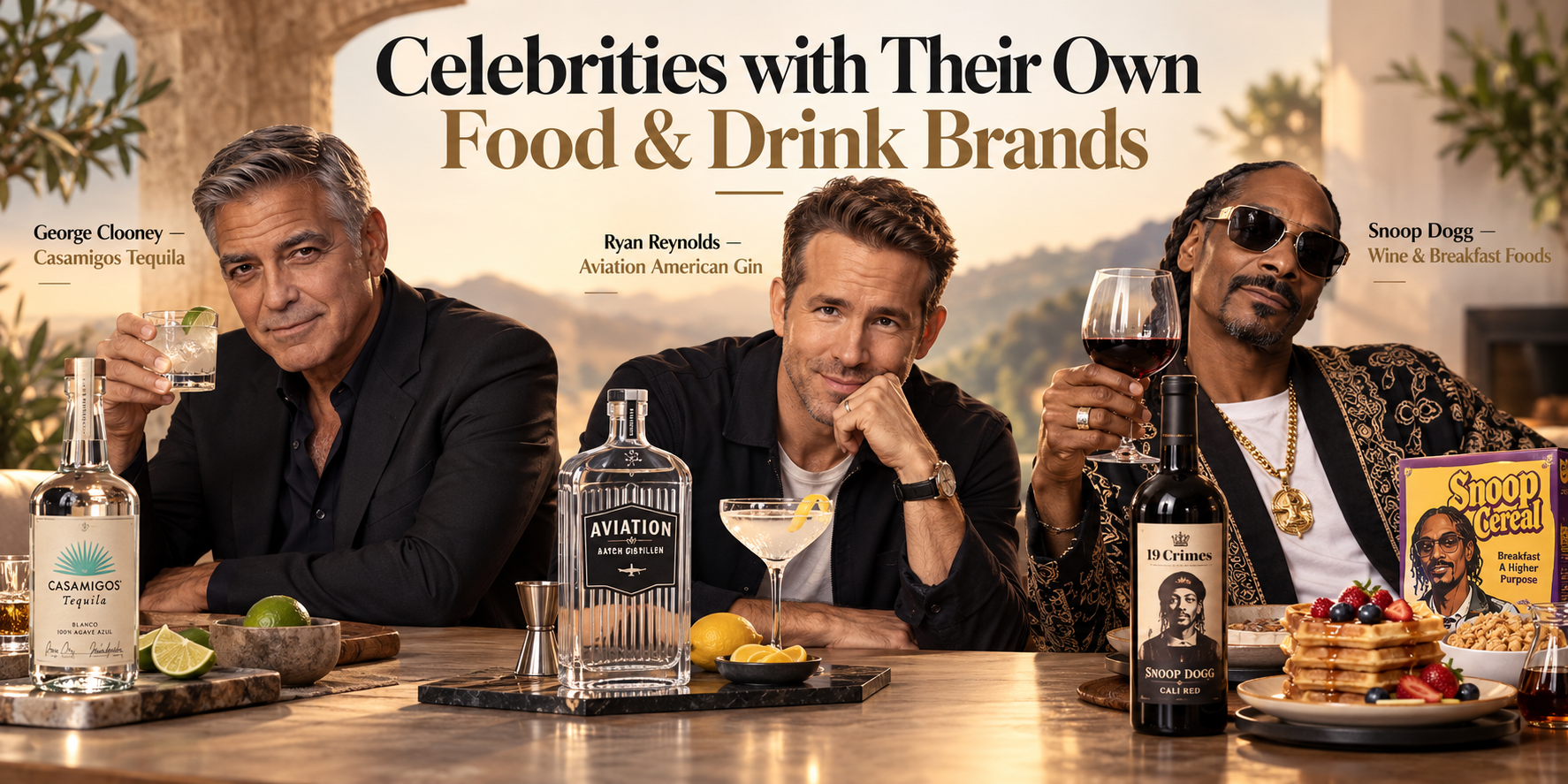
Celebrities who have launched their own food and drink brands include George Clooney (Casamigos tequila), Ryan Reynolds (Aviation American Gin), Snoop Dogg (wine and breakfast foods), Hugh Jackman (Laughing Man Coffee) and Kylie Jenner (Sprinter vodka soda). Casamigos sold to Diageo for up to $1 billion in 2017, and Aviation followed for up to $610 million in 2020. The famous name wins the first purchase. Taste and price win the second.
A famous face on a bottle used to mean a paid advert. Now it usually means the star owns a piece of the company. Tequila, gin, coffee, cereal, canned cocktails. Walk down any supermarket aisle and you’ll bump into somebody you last saw on a cinema screen.
Some of these brands have grown into serious businesses, and a couple sold for sums most film contracts can’t match. But the pattern behind the winners is fairly plain. The name opens the door, and after that the product has to stand on its own.
George Clooney and Casamigos: the tequila that was never meant for sale
George Clooney started Casamigos in 2013 with two friends, Rande Gerber and Mike Meldman. By their own telling, they only wanted a house tequila to drink among themselves. Selling it came later.
It grew quickly. In 2017 Diageo, the company behind Johnnie Walker and Smirnoff, bought Casamigos in a deal worth up to $1 billion. That is four years from launch to one of the biggest celebrity brand sales on record.
What stands out is how little Clooney’s face mattered by the end. People were ordering Casamigos by name in bars without a thought for who started it. That is the real test of a celebrity brand. Does it still sell when the celebrity is not in the room?
Ryan Reynolds and Aviation Gin: when the owner is also the ad department
Ryan Reynolds did not create Aviation American Gin. The brand came out of Portland, Oregon, and he bought a stake in it in 2018. What he brought was the marketing.
Posing with a bottle was never the plan. He wrote himself into the ads with the same dry humour you see in his films, and most of it ran online, where a good joke travels for free. In a category full of serious bottles talking about botanicals, a gin that made you laugh was easy to remember.
The numbers followed. Aviation’s volumes grew by more than 100% in 2019, according to Diageo. In August 2020 Diageo agreed to buy Aviation and its sister brands for up to $610 million, with $335 million paid upfront and the rest tied to how the gin performs over ten years. Reynolds kept an ownership interest.
Snoop Dogg: one personality, many aisles
Snoop Dogg has gone the other way. No single hero product. He has put his name across several parts of the shop instead.
In 2020 he teamed up with the Australian wine label 19 Crimes for Snoop Cali Red, the label’s first California wine, and a rosé followed. Then came breakfast. Through Broadus Foods (Broadus is his real surname) he sells cereal, and the Mama Snoop’s range covers oatmeal, grits, pancake mix and syrup.
Wine and pancake mix have nothing in common except him. And that is the point. When a public image is strong and people like it, it can stretch across categories that a normal food company would never try to connect.
Hugh Jackman and Laughing Man Coffee: a brand that began with a farmer
Hugh Jackman’s coffee company started with a trip to Ethiopia, where he met a young coffee farmer named Dukale. Jackman came home wanting to do something useful with what he had seen, and in 2011 he launched Laughing Man Coffee with his friend David Steingard.
The social purpose was there from day one. The coffee is Fair Trade certified, and Jackman has committed 100% of his own profits to the Laughing Man Foundation, which supports coffee farming communities. One of the blends is named after Dukale.
Here is the practical bit for anyone reading this and thinking, I could do a coffee brand. You probably can, and you don’t need to own a roastery. Working with specialists such as Ringtons gives a new brand a route into coffee without building every part of the roasting and production process on its own. A private label partner brings the coffee expertise. You decide the blend, the packaging and the identity on the front of the bag.
Kylie Jenner and Sprinter: betting on the can
Kylie Jenner entered drinks in March 2024 with Sprinter, a canned vodka soda. It launched across the US in four flavours (black cherry, peach, grapefruit and lime) at 4.5% ABV and 100 calories a can, sold in packs of eight for $19.99.
The format tells you more than the famous name does. Ready to drink cans keep growing, and they suit younger adults who want something light to carry to a friend’s place without a bottle, a mixer and a bag of ice. Her sister Kendall had already done tequila with 818. Kylie picked the can.
Why do celebrity food and drink brands keep appearing?
Because people buy food and drink again and again. That is the short answer.
A fan might buy a celebrity’s perfume once, or one jacket from a fashion line. But a bottle of gin runs out. So does a bag of coffee. If the customer liked it, they buy another, and then another. Very few categories give a famous founder that kind of repeat sale.
The big drinks companies have also shown they will pay heavily for a brand that is already growing. The two Diageo deals above were worth up to $1.61 billion between them.
| Celebrity | Brand | What it sells | Started or joined | Milestone |
|---|---|---|---|---|
| George Clooney | Casamigos | Tequila | 2013 | Sold to Diageo in 2017 for up to $1 billion |
| Ryan Reynolds | Aviation American Gin | Gin | 2018 (bought a stake) | Sold to Diageo in 2020 for up to $610 million |
| Snoop Dogg | Snoop Cali Red, Broadus Foods | Wine, breakfast foods | 2020 onwards | Products in several grocery categories |
| Hugh Jackman | Laughing Man Coffee | Coffee | 2011 | Founder’s profits go to the Laughing Man Foundation |
| Kylie Jenner | Sprinter | Canned vodka soda | 2024 | Launched across the US in four flavours |
So what separates the brands that last from the ones that go quiet after launch week? The famous owner gets the product noticed. That part is easy. What brings the customer back is flavour, price and whether it is actually on the shelf when they go looking. If we had to pick one of the five to study for marketing alone, it would be Reynolds, because he made the advertising worth watching for its own sake.
Frequently asked questions
Which celebrity drink brand sold for the most?
Of the brands covered here, Casamigos is the biggest. Diageo bought George Clooney’s tequila brand in 2017 in a deal worth up to $1 billion, only four years after it launched.
Did Ryan Reynolds start Aviation Gin?
No. Aviation American Gin began in Portland, Oregon, and Reynolds bought a stake in 2018. He became the public face of the brand and kept an ownership interest when Diageo agreed to buy it in 2020 for up to $610 million.
Why do so many celebrities launch food and drink brands?
Food and drink get bought repeatedly, which most celebrity products do not. A customer who likes a gin or a coffee keeps buying it for years. The Casamigos and Aviation sales also showed founders that a large exit is possible.
What is Kylie Jenner’s Sprinter?
Sprinter is a canned vodka soda that Kylie Jenner launched in the US in March 2024. It comes in black cherry, peach, grapefruit and lime, at 4.5% ABV and 100 calories a can.
Can you launch a coffee brand without owning a roastery?
Yes. A private label coffee roaster develops and produces the coffee for you, and you sell it under your own name and packaging. It is the usual starting point for new coffee brands, with or without a celebrity behind them.
One last thought
More famous names will keep turning up on labels. The next time you spot one, try it once and ask yourself a simple question. Would you buy it again if you didn’t know whose it was?
Latest blog
- Celebrities Who Have Launched Their Own Food and Drink Brands (And What Made Them Sell)
- Stop Losing Sales Because of Poor Photos: The eCommerce Visual Checklist You Need
- Key Benefits of Hiring a Professional Freight Forwarder to Hawaii
- The TikTok Effect: How Social Media is Creating New UK Business Trends
- 5 Must-Have Features Every Small Business Website Needs to Succeed in 2025